
The Accountability Gap: Why Leaders Struggle and What to Do About It
Let’s talk about something most leaders feel, but don’t always say out loud.
Accountability is hard... and the data backs that up.
According to Gallup, less than half of leaders report that they are outstanding or exceptional at creating accountability, defined as holding everyone responsible for delivering exceptional performance.
And it doesn’t stop there.
Gallup data also shows that managers are even more pessimistic about their leaders’ ability to hold teams accountable.
Let that sink in for a moment.
But here’s where it really matters.
Gallup found that the 30% of managers who say their leaders are exceptional or outstanding at accountability are three times more likely to be engaged at work than those who say their leaders are not, 51% compared to 17%.
That’s not just a leadership skill...
That’s a culture driver.
That’s engagement.
That’s performance.
I see this all the time in my work with leaders across industries. High performers get promoted because of results, not because they’ve been equipped to lead people. And then one day, they’re expected to hold others accountable, without the tools or confidence to do it well.
So what happens?
We avoid the conversation.
We soften the message.
We hope things improve on their own.
And they don’t.
Not because people don’t care, but because people need clarity.
The Truth About Accountability
Accountability isn’t about calling people out.
It’s about calling people up.
It’s helping your team understand what success looks like, where they stand, and how they can grow. Done well, accountability actually builds trust, not breaks it.
But like any leadership skill, it has to be practiced.
So if you’re reading this thinking "this is me," you’re not alone. And more importantly, you’re not stuck.
3 Practical Ways to Strengthen Accountability
1. Get Clear Before You Get Critical
Many accountability issues aren’t performance problems, they’re clarity problems.
Before holding someone accountable, ask yourself:
-Was the expectation clearly defined?
-Did we align on what success looks like?
-Did they have the tools and support to deliver?
Clarity creates confidence, for both you and your team.
2. Address It Early, Not Emotionally
The longer we wait, the harder the conversation becomes.
Instead of letting frustration build, address gaps early and calmly:
-Focus on the behavior, not the person
-Be specific, not general
-Keep it future focused
Accountability works best when it feels like guidance, not punishment.
3. Build the Skill with Support
You don’t have to figure this out on your own.
One of the most effective ways we’ve seen leaders grow in accountability is through executive coaching.
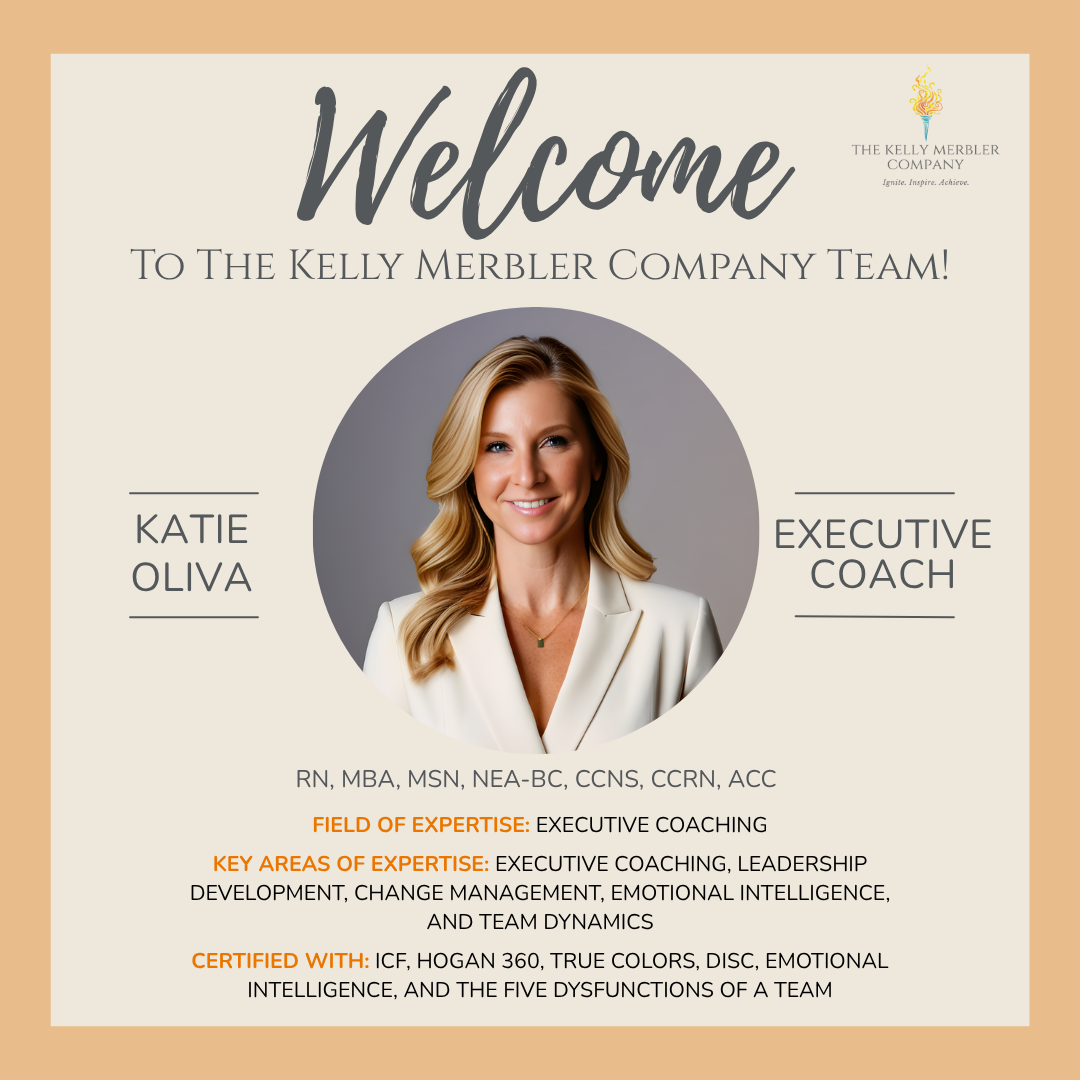
At The Kelly Merbler Company, one of our executive coaches, Katie Oliva, works closely with corporate leaders to strengthen accountability within their teams. She is helping leaders have clearer conversations, set stronger expectations, and build more engaged, high-performing teams.
If this is an area you are looking to grow in, for yourself or for your leaders, I would love to connect with you and explore if Katie could be a resource for you.
Let’s start a conversation and see how we can support you.
Final Tip
Accountability isn’t about being perfect.
It’s about being intentional.
And when you get it right, you don’t just improve performance, you elevate people.
So here’s your question to reflect on:
Where might you be avoiding a conversation that could actually move your team forward?
Start there.
To Your Growth,
Kelly